
Nice short-term rentals in 2026: rules that changed mid-year
Nice’s short-term rental rules shifted again in 2026: the primary-residence cap moved back to 120 nights, registration remains mandatory, and secondary homes in quota zones face a tighter authorisation path. Here’s what owners, hosts and expats need to check now.
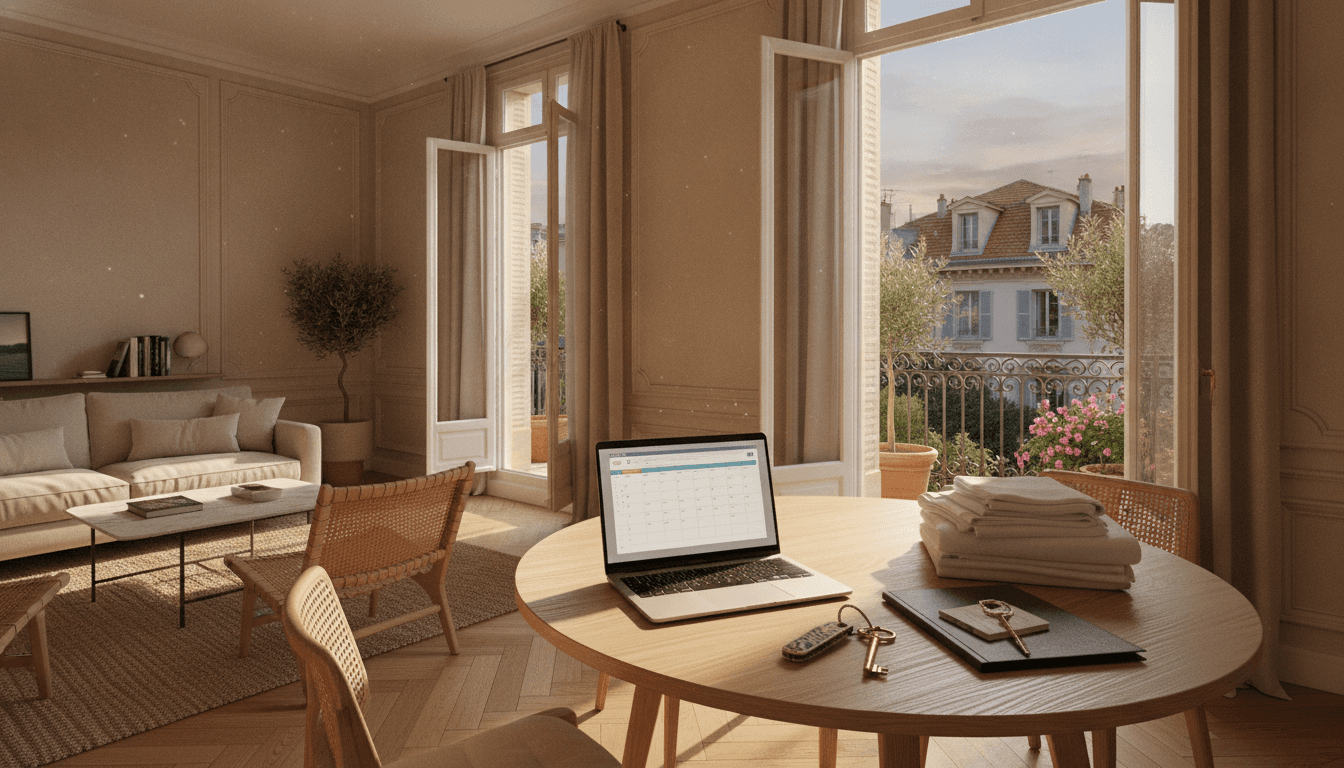
Nice changed course mid-year.
From January, many owners were working around a tighter cap on primary residences. By September 2026, the city had moved back to a 120-night annual limit for a primary residence. At the same time, registration rules under the Loi Le Meur remain in force, secondary residences in certain parts of Nice now sit inside a quota system, and the paperwork question has become harder, not easier.
For owners who rent a flat near the Port, a pied-à-terre in the centre, or a family apartment they use part of the year, the practical question is simple: can I still rent legally, and what exactly do I need to do now?
This guide focuses on Nice in September 2026, with the current local position and the national compliance layer that now sits on top of it. For official details, it is still worth checking the Ville de Nice guidance for furnished tourist rentals and the national rules summary on economie.gouv.fr.
Can you still rent an Airbnb in Nice in 2026?
Yes, but the answer depends on which property you are renting and where in Nice it sits.
If it is your primary residence, Nice is back to a limit of 120 nights per year as of September 1, 2026. Earlier in the year, the city had moved to 90 nights, which is why many owners and agents are still repeating that figure. It is now outdated for Nice.
If it is your secondary residence, the key issue is usually change of use authorisation. In four quota zones of Nice, new authorisations are limited in number and initial applications for 2026 run from September 1 to December 31, 2026. These authorisations are valid for five years and do not renew automatically.
That distinction matters. Plenty of confusion comes from owners mixing the primary-residence night cap with the separate authorisation regime for second homes.
What changed under the Loi Le Meur for Nice hosts?
The Loi Le Meur, adopted in late 2024, gave local authorities stronger tools to regulate furnished tourist rentals. In practice, for Nice hosts, the two points owners feel most are registration and local control over supply.
Registration is no longer a detail you leave for later. Short-term furnished rentals now fall under a mandatory online declaration process via the national portal known as Declaloc, which assigns a 13-digit registration number. That number must appear on listings. The legal deadline was May 20, 2026, although rollout of the national téléservice may have slipped later in the year, with local Nice numbers remaining valid in the meantime.
The law also strengthened the position of co-ownerships. If you own in a building in Carré d'Or, Libération or the Port, it is worth checking the copropriété rules carefully. A syndic can now be in a stronger position to prohibit short-term rental activity expressly in the building regulations.
There is also an energy-performance angle. New change-of-use authorisations require a DPE between A and E. From January 1, 2034, that threshold tightens to A to D.
What is the change-of-use system in Nice, and where do quotas apply?
If you are renting a secondary home on a short-let basis, this is the part to read slowly.
Nice has introduced quotas for new change-of-use authorisations in four zones:
- Zone 1: Vieux-Nice
- Zone 2: Riquier, Port, Mont Boron
- Zone 3: Centre-Ville
- Zone 4: Ouest
For 2026, the total allocation is 691 authorisations across those four zones. If your flat falls inside one of them, timing matters. The initial application window for 2026 runs from September 1 to December 31, submitted online.
This is where owners often need sober advice rather than enthusiasm. Maison Cinq Étoiles handles Property Management for owners who want a realistic view of a Nice asset over time: whether a property is likely to suit short-term rental at all, what local constraints mean for strategy, and when a long-term rental approach may simply be the cleaner commercial choice. We do not file ourselves as lawyers or replace official instructions from the city; when a legal point sits outside our scope, we say so plainly.
What are the fines for illegal short-term rentals in Nice?
The fines are one reason owners are outsourcing the operational side more carefully.
- Failure to register can lead to a fine of up to €10,000.
- A false declaration, or use of a fake registration number, can lead to a fine of up to €20,000.
- Platforms hosting non-compliant properties face fines of up to €50,000 per listing.
- Exceeding the primary-residence limit can trigger a civil fine of up to €15,000.
The article title many people are clicking this year mentions fines up to €80,000. That figure does circulate in broader discussions of enforcement, but it is not the figure supported by the Nice-focused research brief used here, so we are not relying on it.
In practical terms, compliance pressure also changes how owners handle access, guest arrivals, and post-stay checks. If you are trying to keep records straight, the weak point is often not the booking platform. It is what happens on the ground when keys move around informally, a cleaner flags damage by text at midnight, or a last-minute stay is squeezed in without proper preparation.
A short checklist for Nice owners in September 2026
- Confirm whether the property is your primary residence or a secondary residence.
- Check whether the address falls inside one of Nice’s four quota zones.
- Make sure the property has a valid registration number and that it appears on listings.
- If you are relying on change-of-use authorisation, verify the application window and the current city guidance.
- Review your copropriété rules for any restriction on short-term rentals.
- If authorisation is needed, confirm the property’s DPE rating.
- Keep your stay calendar and occupancy records in order.
- Review how keys, arrivals, departures, linen and inspections are handled between bookings.
Why regulation is pushing owners toward better turnover oversight
When rules tighten, many hosts assume the answer is legal paperwork alone. It rarely is.
The real exposure often sits in operations: a guest arrives before the flat is ready; no one has checked after departure; linen is late; a neighbour complains because bins were left in the corridor; a platform asks for proof and the owner has no clean chain of information.
That is where Maison Cinq Étoiles’ Conciergerie work tends to matter. We coordinate arrivals and departures, key handover, fresh linen, welcome amenities, pre-arrival preparation and post-departure inspection. In a regulated market, that is not about theatre. It is about having one accountable point of contact for the property.
Cleaning sits inside that picture too. A short-let turnover in Nice is rarely only about cleaning a bathroom and changing sheets. It is access, timing, condition reporting, and making sure the flat presented online is the flat the next guest actually opens. This is exactly the kind of turnover and maintenance coordination Maison Cinq Étoiles handles for owners, Airbnb hosts and property managers on the Riviera.
Taxe de séjour and listing details: small lines that still matter
Nice also applies the tourist tax.
For unclassified holiday rentals, the rate is 6.70% of the pre-tax price per person per night, capped at €6.43 from January 1, 2026. Classified rentals pay a flat rate per star, ranging from €1.07 to €6.43 for palace-rated properties.
This is one of those details owners sometimes assume the platform will sort perfectly on its own. Sometimes it does. Sometimes the setup or category on the listing side needs checking. It is worth reviewing rather than assuming.
FAQ
What are the Airbnb rules in Nice for 2026?
For a primary residence in Nice, the current limit is 120 nights per year as of September 1, 2026. Registration remains mandatory, and secondary residences may require change-of-use authorisation, especially in the city’s quota zones.
How many nights can I rent my primary residence in Nice?
As of September 2026, Nice applies a limit of 120 nights per year for a primary residence. The earlier 90-night rule is no longer the current position.
Do I need a permit to rent my second home in Nice?
Often, yes. For secondary residences used as furnished tourist rentals, change-of-use authorisation is the key issue. In certain Nice zones, new authorisations are subject to quotas.
How do I register my short-term rental in Nice?
Short-term furnished rentals are subject to mandatory online declaration through the national system known as Declaloc, which issues a 13-digit registration number. Local Nice guidance remains essential, especially while rollout details continue to settle.
The regulatory picture in Nice is now tight enough that good intentions are not a system. Maison Cinq Étoiles helps owners with the parts we genuinely handle on the ground: turnover cleaning, conciergerie coordination and property-management advice rooted in how a Riviera property performs over time.

Get in Touch
Interested in our services? Send us a message and we'll get back to you shortly.